
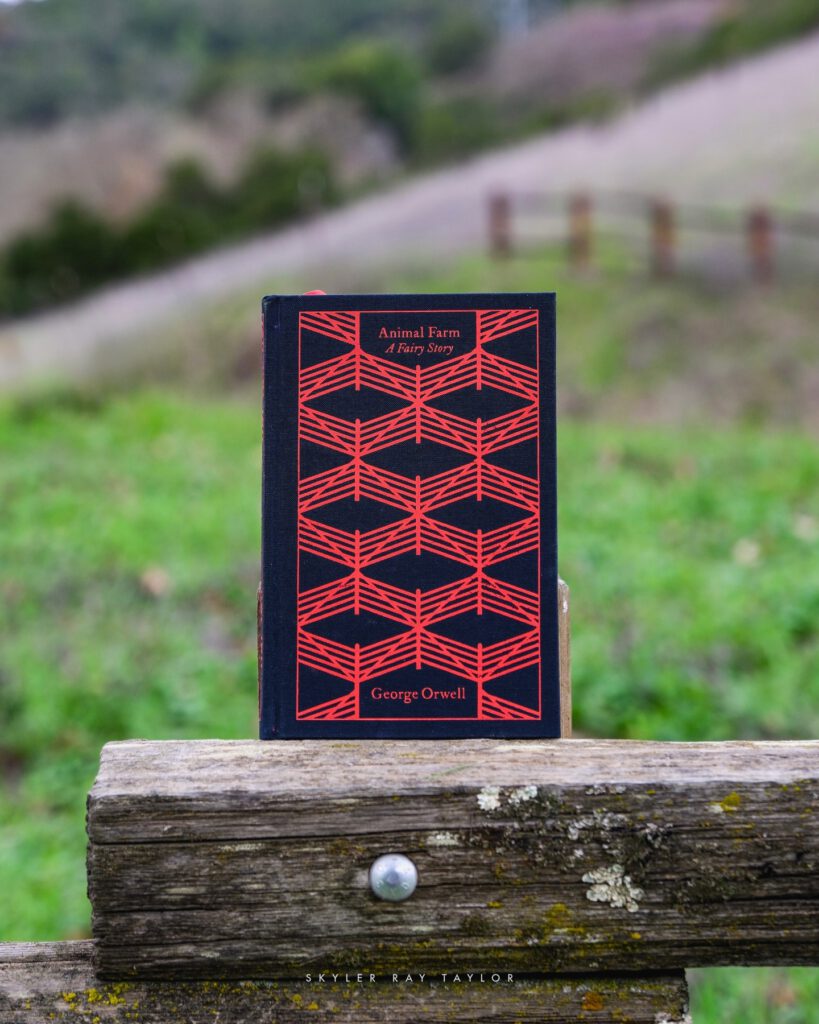
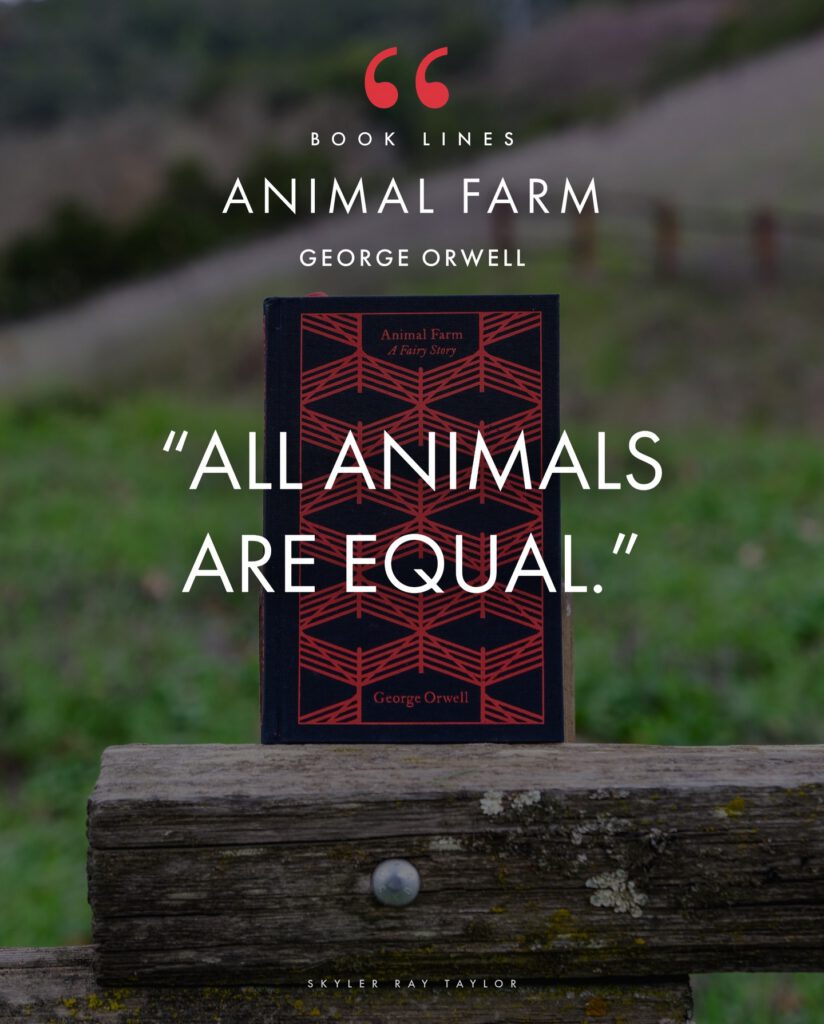
“All animals are equal.”
George Orwell, Animal Farm, 1945
Orwell never intended for Animal Farm to be a warning against socialism.
It was his furious indictment of the betrayers of revolutions.
Some historical context:
As the world sank under the Great Depression, many intellectuals, idealists, and dreamers felt that capitalism had failed. The Soviet Union’s “classless utopia,” hard-won by revolutionaries as the Russian Empire crumbled over a decade before, seemed to represent the greatest hope for the future of humanity.
With the global economy in shambles, authoritarians began to seize power; Mussolini in Italy, Hitler in Germany, Salazar in Portugal, and Franco in Spain. The most vile of us, transmuting people’s hopes and dreams into chains of control.
Orwell’s anger against these fascists would prompt him to move to Spain in 1936 to join the Spanish Civil War, taking up arms against Franco.
Franco won.
Meanwhile, Joseph Stalin consolidated power and instituted brutal programs in the USSR, perverting the ideals of the revolution.
And after WWII and the “fall” of fascism, few would publicly decry Stalin, the leader of one of the Big Three Allied Powers. Orwell, however, refused to forget Stalin’s forced starvation of Ukraine in 1933 to crush Ukrainian resistance and identity.
Animal Farm would be his controversial love letter to the Russian and Ukrainian people and a sharp backhand to would-be dictators worldwide.
By the 1950’s, millions of copies were being secreted into Poland, Hungary, and Czechoslovakia by clandestine balloons, while their respective governments shot them down.
Such is the lasting power of artistic rage, channeled thoughtfully against the animals in power.