
“How these papers have been placed in sequence will be made clear in the reading of them.”
Dracula, Bram Stoker, 1897
///
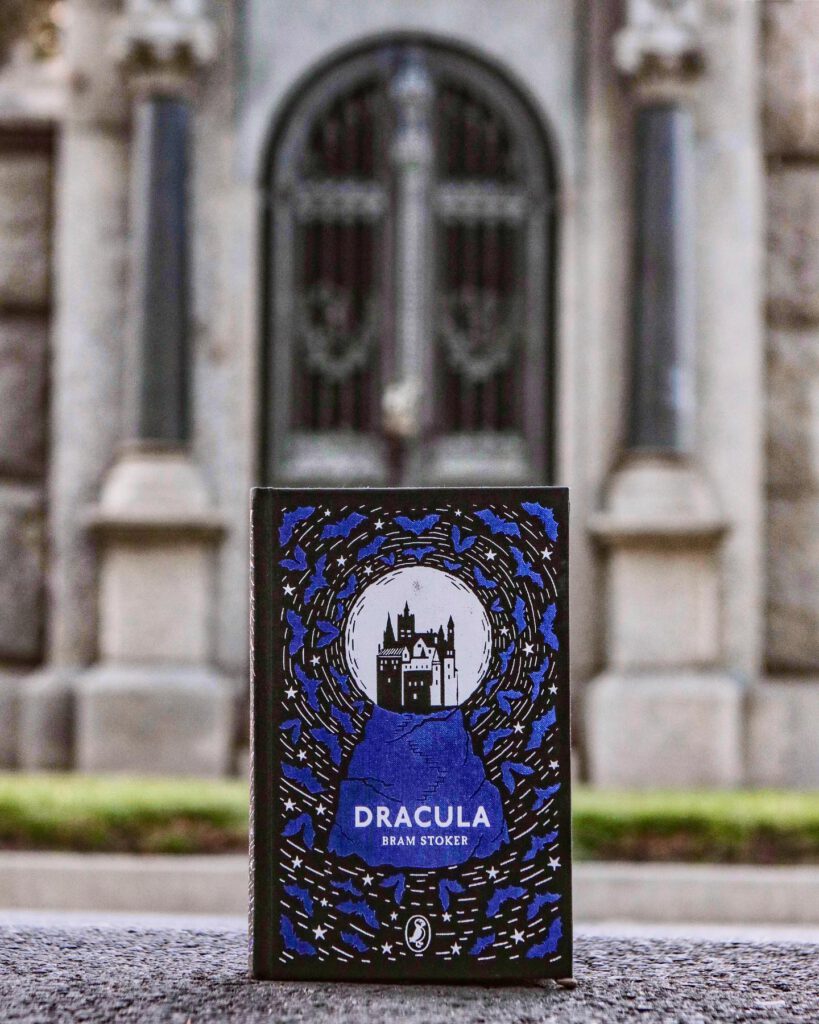
A NOTE ON THE PHOTO: Yes, I took a trip to a local graveyard to photo my copy of Dracula in front of a crypt. I was not the only person at the cemetery the evening before All Hallows’ Eve, but that is a story for another time.
///
I decided to read this creepy classic for Halloween this year. I’m surprised so far by how fresh the structure of the book feels for something written in 1897. It’s set up as a series of journal entries, newspaper clippings, and written correspondence from various characters who all have a relationship to each other. The horror unfolds in the shadows of this cryptic evidence. The reader of the book becomes an investigator, piecing together the story from the clues.
There are the partial journal entries of Jonathan Harker, the unfortunate English solicitor who has arrived from London to a castle in Transylvania to give legal counsel to a mysterious Count who is interested in purchasing a piece of property in a quiet neighborhood in London next to a mental asylum; the letters back and forth between Mina Murray, Jonathan’s fiancé, and Lucy Westenra, another young Londoner who is being courted by a riveting stranger; a newspaper clipping about an inexplicable storm which heralded the arrival of a derelict ship whose only passenger was a corpse bound to the wheel; the scientific findings of Dr. Seward, keeper of the insane asylum, who has documented unusual changes in the occupants of the institution.
Despite the fact that the tropes of vampire tales are well known, this book has me on the edge of my seat, eagerly reading though the clues to piece together the horror that seems to have spread from the quiets of Transylvania into the shadows of London. Bram Stoker has many imitators, but the original is worth revisiting.