
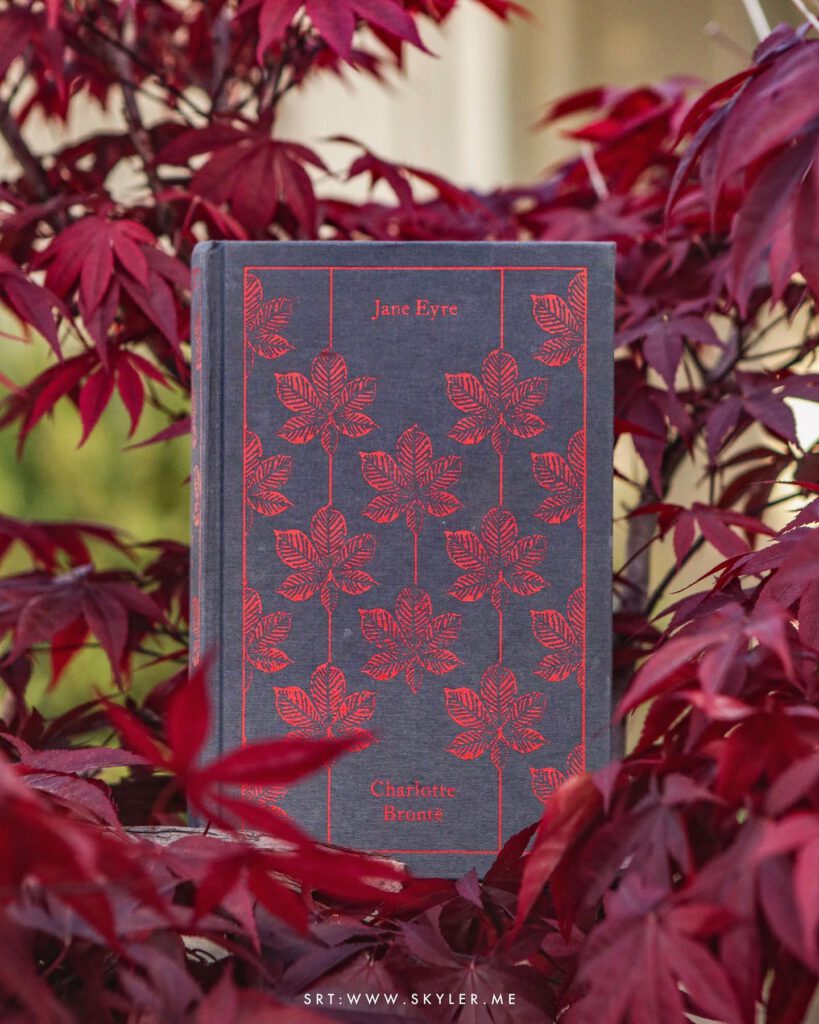
“There was no possibility of taking a walk that day.”
Charlotte Brontë, Jane Eyre, 1847
///
I can’t quite put this book in a box. Gothic horror? Victorian melodrama? Feminist satire? Coming of age critique of the aristocracy? Jane Eyre is all of these things, but more than the sum of them. These elements combine with its plot twists to make it an unusual, surprising read.
Charlotte Brontë published this book under her pseudonym Currer Bell so the public would not know she was a woman, a fact which gives us a lot of context as to how women were viewed during the restrictive Victorian era. Passages like the following, which dares to suggest women should have (gasp) autonomy and agency in their own lives, would have been unacceptable if written by a woman, and degenerately rebellious from a man:
“I am no bird; and no net ensnares me: I am a free human being with an independent will.”
Every episode of Jane’s life examines the intersection of gender, class, patriarchy, and autonomy. Her hateful aunt inflicts lifelong psychological damage. Her school’s headmaster Mr. Brocklehurst doles out strict, hypocritical punishments and privations in the guise of religion. Jane becomes a governess, a job where she continues to be marginalized and serve at the pleasure of her master Mr. Rochester and other members of the higher class. The book is a kind of Pilgrim’s progress, only instead of a long, arduous journey to Celestial City, this pilgrim is in search of her own humanity. She has to defy Man and God to find it.
Through all the turns of her story the thing which separates Jane Eyre from other books of the period is Jane’s quiet resolve to not be absorbed by others’ demands. Time and time again she is brought to the very precipice of losing herself, and she is able to back away from the ledge of others’ expectations.
In this sense, aren’t we all Jane Eyre?