
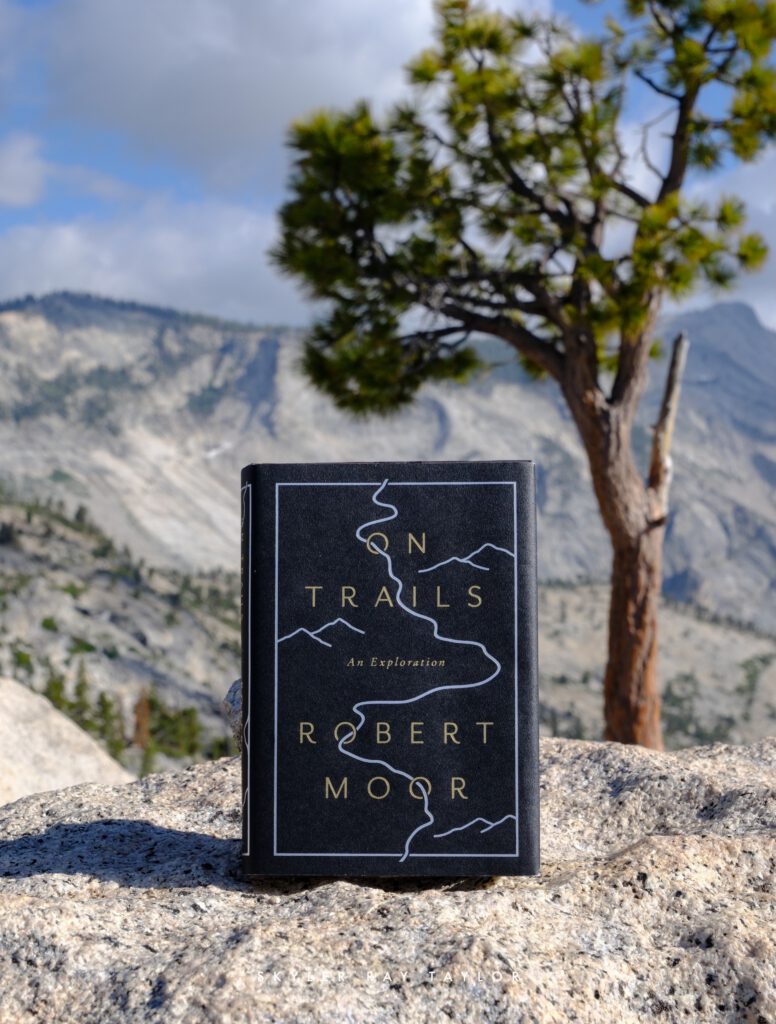
“Without trails, we would be lost.”
Robert Moor, On Trails, 2016
This book represents Moor’s extended meditation on trails; what they are literally, metaphorically, metaphysically, and, finally, existentially.
His fascination started with a grueling season plodding along the Appalachian trail. This quote captures his mixed feelings about his five-month march: “On a trail, to walk is to follow… You do these things because someone, somewhere, decided that that’s where the trail must go.”
From this through-hike meditation, Moor takes a meandering path from natural history (what are the oldest recorded animal paths) to language (what is a trail, a path, a road, a way) to history (when did “wilderness” begin to mean “idyllic peace” rather than “hostile wasteland”) to philosophy (are paths made by one person, or are they shaped by all who walk them).
I’ve walked my own share of trails, literal and metaphorical.
I’ve seen the immense summits of the Sierras and rugged gorges of the Rockies and hostile deserts of Moab and tranquil forests of Illinois, in deluges of rain and hail, furnace-waves of heat, and heavenly sunshine with pleasant breezes. I’ve joined the flow of the masses on bustling broadways, followed ways forged by fools, and traced some paths less traveled. Some of these I might loop back and do again; others I’ll avoid at all costs.
I’ve learned I’m seldom the only person going my way. This has at times been validating. At others, humbling.
I resonated with where Moor ended up on his journey: “We are born to wander through a chaos field. And yet we do not become hopelessly lost, because each walker who comes before us leaves behind a trace for us to follow.”