


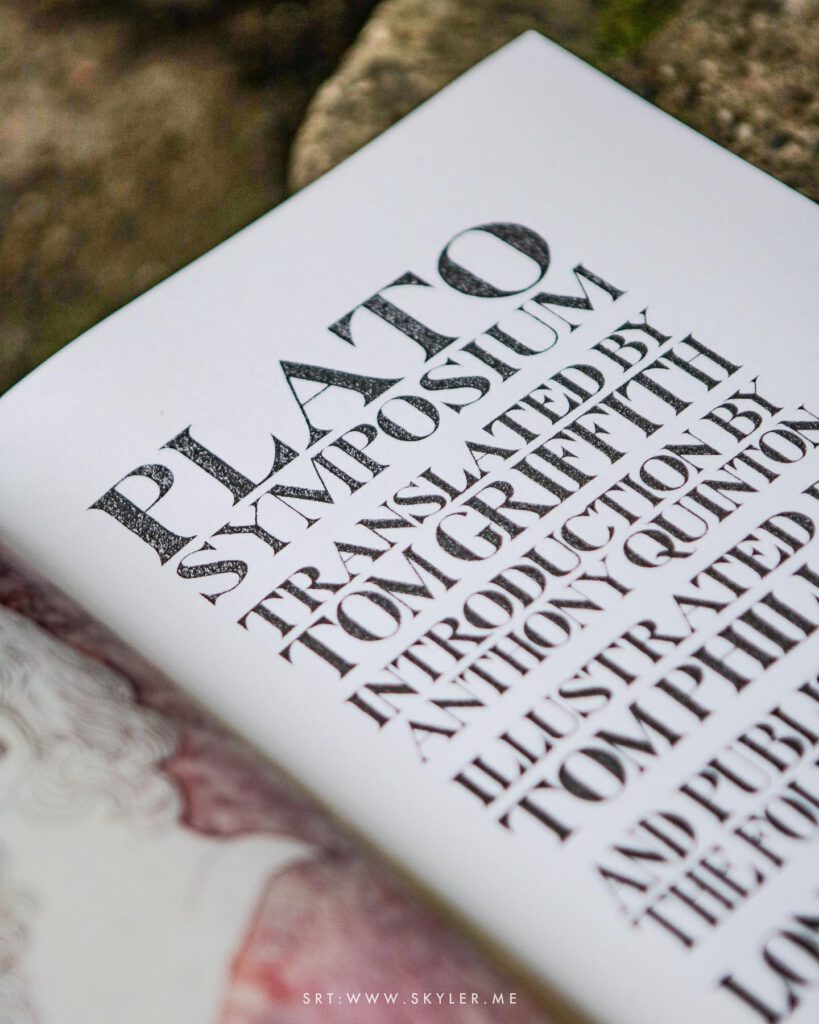
“I met Socrates, all washed and brushed, and wearing shoes (a thing he hardly ever did). I asked him where he was going looking so elegant.”
Symposium, Plato, 385 BCE
///
Symposium is a strange, wonderful read for many reasons.
Plato captures a casual side of the ancient world which no other text from antiquity really does. The few domestic scenes in the Iliad and the Odyssey, like those in Nestor’s palace or at Odysseus’ home in Ithaca, are mythic in scale and the heroes are meta-human. Similarly, the post-exile books of the Bible’s Old Testament, written just 150 years before the Symposium (think of Nehemiah and Malachi), deal with gods, emperors, and high priests.
Symposium, by contrast, reads like an anecdote from a drunken Pulitzer after-party. The guest list would make William Randolph Hearst jealous: An award winning author; a barbed comedian; a magnetic, openly homosexual politician; a male model; a pompous physician; a homeless philosopher. The intellectual and cultural elite of the most liberal city in the world assembled to talk late into the night about the nature of love.
It’s a short book, but contains ideas about love and sexuality which are still discussed today. The guests posit that the goal of love is to find your soul mate, your other half; or to inspire great music and art; or for the pleasure of sex; or to take human’s ability to love as proof that the god of love does in fact love us; or, most salaciously to modern readers, that the ultimate form of love is masculine, homosexual love.
Socrates speaks last and suggests that all love leads upwards, like a staircase, until you reach the purest form of love: love of philosophy. He proposes that the highest purpose of love is the reproduction of ideas, and that the act of becoming “pregnant in mind” requires an intimate relationship with those around you.
The scene then fades into the next morning to find Socrates as the last man standing, having out-drank all the other guests who are either passed out or barely hanging on.
Classical Greece, or a typical weekend in modern day New York City?