

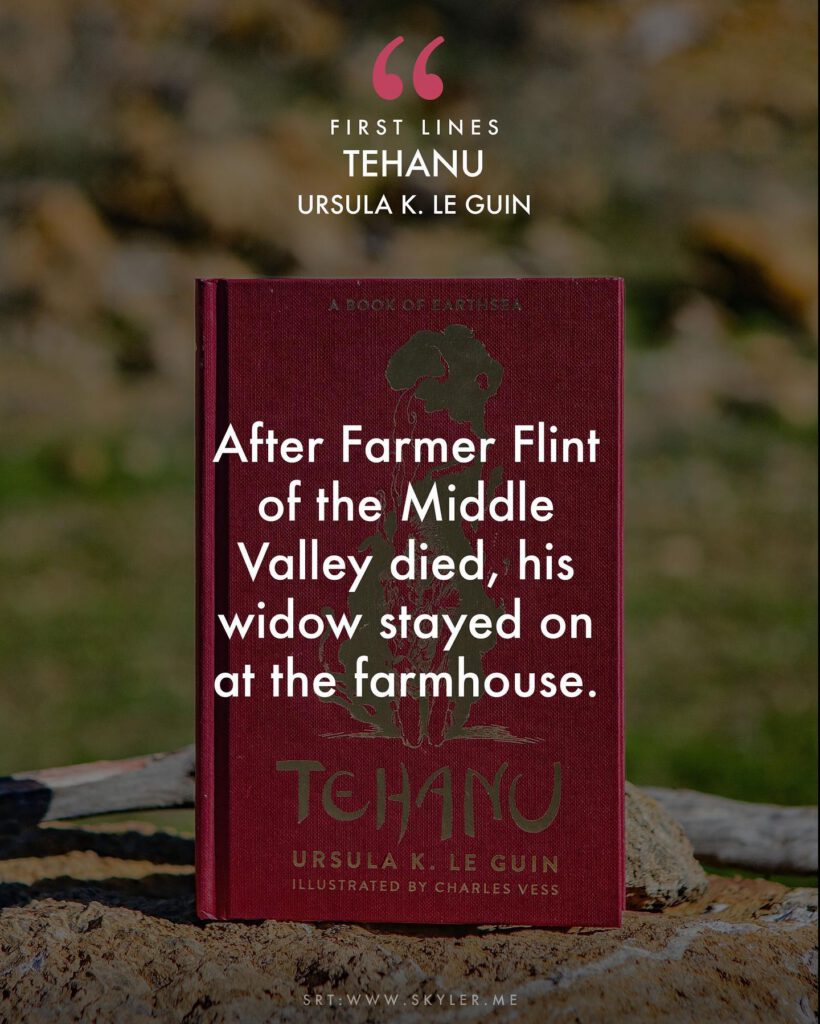
“After Farmer Flint of the Middle Valley died, his widow stayed on at the farmhouse.”
Ursula K. Le Guin, Tehanu, 1990
///
18 years after writing “The Farthest Shore,” Ursula K. Le Guin returned to Earthsea for a quiet finale. Instead of going big, she penned the muted end of Tenar’s story arc. Tenar was the nameless protagonist of “The Tombs of Atuan”, the young girl who gave her identity and future to serve as high priest to the impassive, nameless gods of a dying religion.
Now Tenar was the aging widow of a nobody from nowhere. Her past was buried, like the tombs she grew up in, and only Ged, the wounded and now powerless hero of the previous book, knows her story.
Tenar, in defiance of her xenophobic neighbors’ expectations, had adopted a young girl named Tenahu who had been brutally marred, inwardly and outwardly, not by some planet shaking power, but by the quiet evil of domestic abuse which her neighbors ignored.
This is the Triumph of Le Guin’s “Tehanu”: the laying bare of the enormous stakes of local violence; the threat women of all ages face from lurking men; the dignity which the passage of time strips away.
“Tehanu” achieves great depths as a fantasy novel, not through its grandiose scale, but through its quiet, unflinching gaze into everyday fears.