
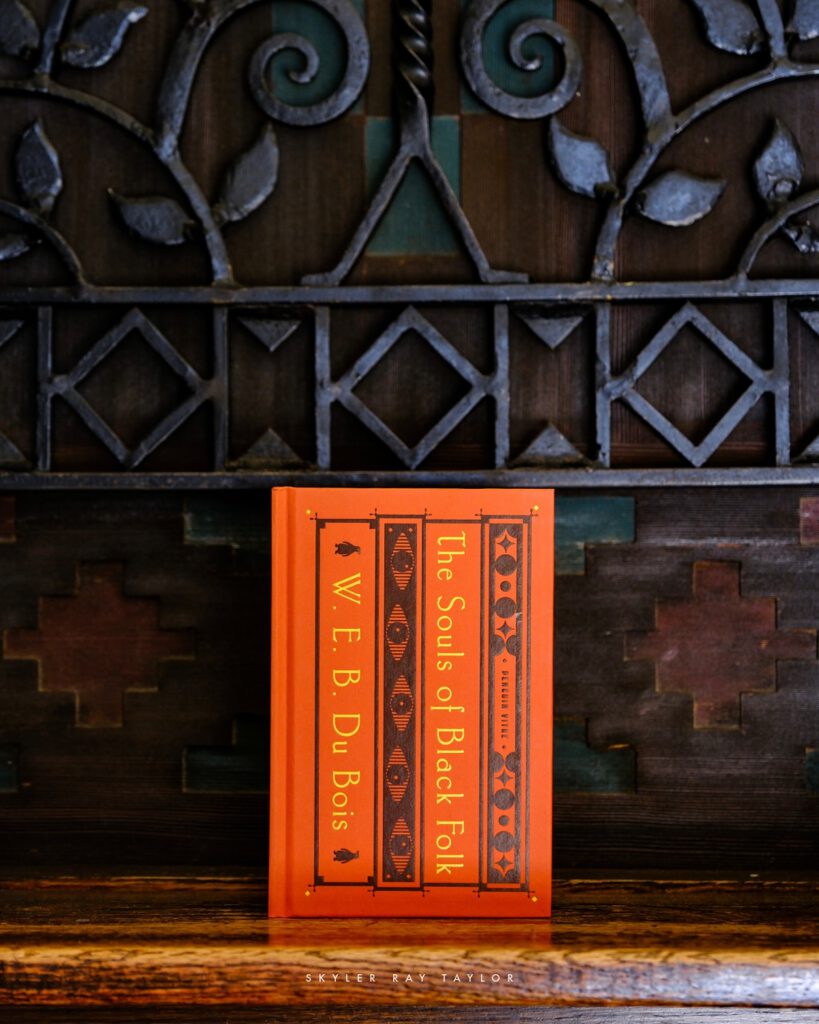
“John,” she said, “does it make every one-unhappy when they study and learn lots of things?” He paused and smiled. “I am afraid it does,” he said”
W.E.B. Dubois, The Souls of Black Folk, 1903
///
Nearly 120 years before the rallying cry of “Black Lives Matter,” there was “The Souls of Black Folk.” In this seminal collection of essays, W.E.B. Du Bois ignited a conversation that reverberated through history, laying the groundwork for events like the founding of the NAACP and, decades later, the Civil Rights Act of 1964—both within his lifetime.
This book marked a turning point in Du Bois’ life, transforming him from a reserved academic at Atlanta University—then the heart of Black intellectualism in the South—into a fierce critic of the era’s racist orthodoxy. He dismantled the racist and dehumanizing theories that portrayed Blacks as soul-less brutes, exposing insidious falsehoods with the precision of a scholar and the fervor of a reformer.
While Du Bois’ analyses of Reconstruction, the Freedmen’s Bureau, and his pointed critiques of Booker T. Washington offer invaluable insight, it’s the deeply personal moments that linger. The haunting death of his two-year-old son—denied medical care by white doctors—and his vivid recollections of life as a young Black teacher in a rural town strip away the veneer of intellectualism, laying bare the harrowing realities of systemic injustice.
But the story that etched itself most in my mind is found in the chapter “Of the Coming of John.” Two young men from the same Southern town, one Black, one white—both named John—return from college to a world unprepared for their transformation. What unfolds is a devastating tragedy, a portrait of lives filled with promise yet undone by racial prejudice. It is a story I will never forget, and one I doubt anyone could read without being profoundly moved.